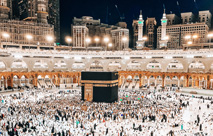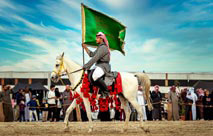
Eid-al-Fitr in Saudi Arabia: General Guide for Travelers
Updated: June 10, 2026
Eid al Fitr in Saudi Arabia is a unique day celebrated by relatives and friends all around the Islamic world. This two-to-three-day celebration occurs immediately after the completion of Ramadan and is the Islamic faith's most important and happy commemoration.
As we gather to welcome the holiest of months, here is the most basic information you should be aware of. Let's take a look at this one-of-a-kind Saudi Arabia holiday.
1. What exactly is Eid al-Fitr in Saudi Arabia?
What is Eid al-Fitr?
Eid-al-Fitr (also spelled and pronounced as Eid-ul-Fitr) is the first of the Islamic (Lunar) calendar year's two Eids. It concludes Ramadan, which Muslims observe yearly to commemorate Allah's revelation of the Quran to the Prophet Muhammad.
This Eid, not to be confused with Eid al-Adha, follows the holy month of Ramadan, during which many Muslims refrain from eating or drinking during the day for 29 or 30 days. It is part of the Sawm (fasting) vow, one of Islam's five pillars.
The festival commemorates the end of the dawn-to-dusk fast and is observed on the first day of Shawwal (the 10th month). When using the Gregorian (solar) calendar, it is roughly 11 days sooner than the previous year.
In essence, Eid al-Fitr in Saudi Arabia allows the faithful to express gratitude to God for granting them the fortitude and conviction to finish the mandatory fast and observe His commands throughout the holy month of Ramadan. Muslims exult at returning to a state of fitra (innocence/purity), having been absolved of all their crimes and therefore beginning life over.
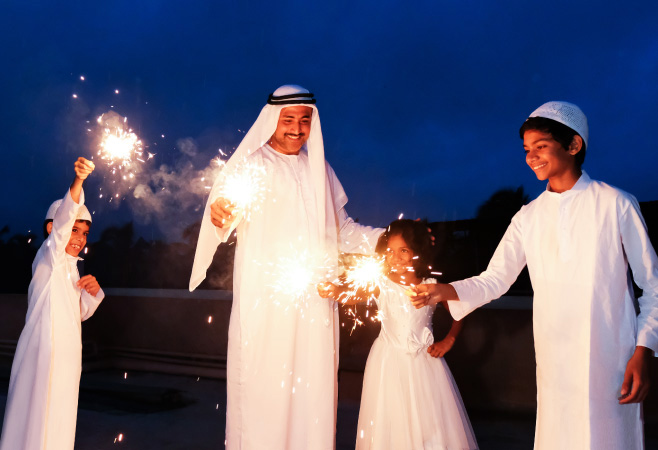
Eid al-Fitr in Saudi Arabia
Why is Eid Al-Fitr important?
Muslims of all sects and affiliations observe two major Islamic festivals. Eid al-Fitr is the first holiday in the Islamic calendar. It is also known as Eid al-Saghir ("The Small Feast") in contrast to Eid al-Kabeer ("The Large Feast"), the second major Islamic feast, Eid al-Adha. Despite being known as "The Small Feast," many people see Eid al-Fitr as the most important.
Muslims frequently see Eid al-Fitr as solely spiritual. It is the day on which Muslims express gratitude to Allah for providing them with the stamina and endurance to fast and keep his commandments throughout the month of Ramadan. This sense of accomplishment after completing an essential work assigned by Allah offers joy to Muslims all across the world.
Muslims all across the world look forward to Eid al-Fitr, which they see as a sacred and joyful day. It brings Muslims closer together and conveys pleasure and love to everyone who comes into contact with a Muslim.
2. How is Eid al-Fitr celebrated in Saudi Arabia?
Why is Eid al-Fitr celebrated?
Eid al-Fitr is seen as a time for celebration, with Muslims uniting with friends and family to express gratitude to God after a month of introspection. The occasion reminds Muslims to be grateful for what they have and to share with those who are less fortunate.
How is Eid al-Fitr celebrated?
In addition to offering gratitude, Muslims make a required charitable gift (zakat al-Fitr), however, it is a lower amount than the customary 2.5 percent zakat on which rich Muslims are charged. This is another of Islam's five pillars. In addition to these monetary contributions, some Muslims volunteer at soup kitchens and distribute their own food to people in need.
Gifting, like Eid al-Adha, is an important aspect of Eid celebrations. Eid contributions are given to children in money bags, and sweet goodies like cookies and dates are passed among loved ones, neighbors, coworkers, acquaintances, and even strangers. Household members will also buy gifts for one another, although the majority of these will be reserved for the youngest members of each family.
Countries throughout the world host massive Eid al-Fitr celebrations. Days of fireworks displays are particularly popular in the United Arab Emirates and Saudi Arabia, where people use the occasion to spend quality time together.

How is Eid al-Fitr celebrated in Saudi Arabia?
Eid prayers
Muslims typically dress up to attend their local mosque, where they participate in prayers as well as have their first meal during daylight hours in a month. The Salat ul-Fajr prayer is said before dawn, and then it is time to bathe before the Eid prayer, also known as Salat al-Eid.
Although Salat al-Eid is only recited twice a year, the imam leading the congregation will normally explain how to say this specific prayer before it begins.
3. Get more 5 Facts about Eid al-Fitr
Is Eid al-Fitr a national holiday?
Yes. Eid al-Fitr is a national holiday. The general public has the day off, while schools and most businesses are closed. Eid al-Fitr is a national holiday in several Muslim nations, including Saudi Arabia and the United Arab Emirates.
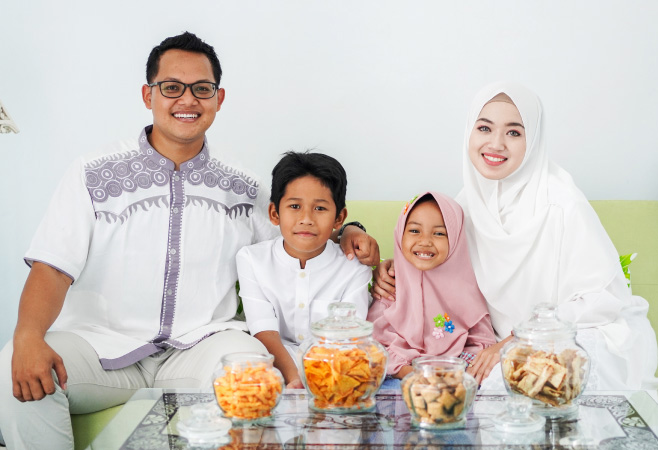
Eid al-Fitr is a national holiday in Saudi Arabia
When is Eid al-Fitr 2027 in Saudi Arabia?
The precise date is seldom known in advance since religious authorities in many nations rely on the sighting of the Eid crescent moon to determine when it will officially begin.
Eid al-Fitr in Saudi Arabia is expected to fall on either 9 or 10 March 2027, depending on the official sighting of the Shawwal crescent moon. Islamic holidays in Saudi Arabia are determined by moon observation, so the exact date will not be confirmed until the end of Ramadan.
Current projections show:
- Ramadan 1448 AH is expected to begin around 8 February 2027.
- Eid al-Fitr is most commonly forecast for 10 March 2027 (Wednesday).
- Some Islamic calendar calculations place 1 Shawwal 1448 AH on 9 March 2027 (Tuesday), highlighting the uncertainty until the moon is officially sighted.
If you are planning travel, leave, or Umrah around Eid, it is best to treat 9–10 March 2027 as the likely Eid period and wait for the Saudi Supreme Court's official announcement closer to the date.
What does the Eid Mubarak greeting mean?
You'll hear Muslims greeting one another with Eid Mubarak, which means "a wonderful day during Eid." It is the usual greeting upon meeting a fellow Muslim for the first time on Eid. Many non-Muslims who are familiar with the word and its meaning extend Eid Mubarak greetings to Muslim friends and coworkers on this day.
What are the most popular foods served during Eid al-Fitr celebrations?
Ma'amoul, laasida, seviyan, kahk, and kuih are some of the most typical Eid al-Fitr festive foods.
What are the distinctions between Eid al-Fitr and Eid al-Adha?
Eid al-Adha, the Islamic calendar's second major festival, occurs after the conclusion of the Hajj, the yearly journey conducted by millions of Muslims to the holy city of Mecca in Saudi Arabia. The Prophet Abraham (Ibrahim), according to the Quran, was eager to offer his son to God (Allah), but God took the sacrifice of an animal instead. The Feast of the Sacrifice, Eid al-Adha, commemorates Abraham's willingness to sacrifice his son for God.
Eid al-Fitr in Saudi Arabia is a time for formal receptions and private visits when friends meet one another, gifts are exchanged, new garments are donned, and relatives' graves are visited.
It’s time to experience Saudi Arabia as you've dreamed. Apply for a Saudi Arabia visa now and get one step closer to your travel goal by following a few easy steps in locating a trustworthy and convenient e-Visa. We provide an e-Visa service and travel insurance that a pilgrim and their family require for a great journey. Visit our Saudi Arabia Immigration Services website right now to choose the best option for your vacation!