Hajj Travel Guide: Requirements, Rituals, Costs & Essential Tips
Updated: February 26, 2026
Hajj travel is a once-in-a-lifetime journey for millions of Muslims around the world. As one of the Five Pillars of Islam, Hajj is a mandatory pilgrimage for every Muslim who is physically and financially able to perform it at least once in their lifetime. Each year, pilgrims travel to the holy city of Mecca in Saudi Arabia during a specific period in the Islamic calendar. Proper preparation is essential to ensure a smooth, safe, and spiritually fulfilling experience.
This guide provides essential information about Hajj travel, including requirements, visas, travel packages, costs, and practical tips for first-time pilgrims.
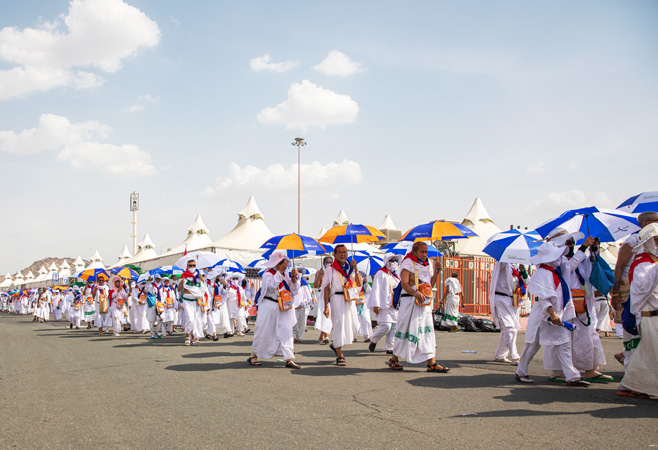
Vast tent city in Mina during Hajj – millions of pilgrims stay in air-conditioned tents in this "City of Tents"
What Is Hajj?
Hajj is an annual Islamic pilgrimage to Mecca, Saudi Arabia, performed during the Islamic month of Dhu al-Hijjah. The pilgrimage includes a series of religious rituals carried out over several days at sacred sites such as Mecca, Mina, Arafat, and Muzdalifah.
Unlike Umrah, which can be performed at any time of the year, Hajj has fixed dates and specific rituals that must be completed in sequence.
When Does Hajj Take Place?
Hajj takes place from the 8th to the 13th day of Dhu al-Hijjah, the final month of the Islamic lunar calendar. Because the Islamic calendar is lunar, Hajj dates shift approximately 10–11 days earlier each year in the Gregorian calendar.
Hajj 2026 is expected to fall around May–June 2026, subject to official moon sighting confirmation by Saudi authorities, during the Islamic month of Dhul-Hijjah (1447 AH).
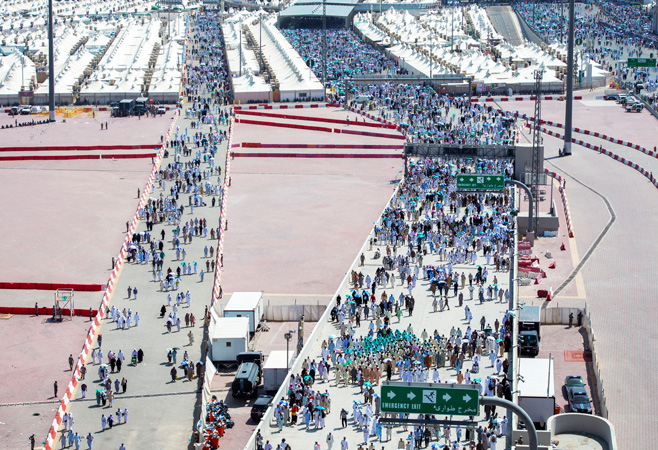 A view above Mina's expansive tent accommodations – an essential rest point between Arafat and Muzdalifah in the Hajj travel sequence
The Core Rituals: A Brief Overview
The sequence of Hajj rites is fixed and follows the tradition of the Prophet Muhammad (peace be upon him).
Ihram: The pilgrim enters a state of spiritual purity at designated Miqat points, donning simple, seamless garments. Specific prohibitions apply while in this state.
Tawaf and Sa’i: Upon arrival in Mecca, pilgrims perform Tawaf, circulating the Kaaba seven times, followed by Sa’i, walking or hastening between the hills of Safa and Marwah.
Day of Arafah (9th Dhu al-Hijjah): The pinnacle of Hajj. Pilgrims stand in contemplative prayer and supplication on the plains of Arafah from noon until sunset. Being present at Arafah is an essential pillar of Hajj, and missing it invalidates the pilgrimage.
Muzdalifah and Mina: After sunset, pilgrims proceed to Muzdalifah for collective prayer and to gather pebbles. They then move to the tent city of Mina for the ritual stoning of the pillars (Jamarat), symbolizing the rejection of temptation.
Sacrifice and Final Tawaf: An animal is sacrificed (typically arranged via a voucher system), commemorating Ibrahim's devotion. Men shave or trim their hair. Pilgrims then return to Mecca to perform a final farewell Tawaf (Tawaf al-Wada).
Hajj Travel Requirements
Hajj Visa Requirements
All international pilgrims must obtain a Hajj visa to enter Saudi Arabia for pilgrimage purposes. Tourist or Umrah visas cannot be used for Hajj.
Key Hajj Visa Requirements:
A valid passport (usually with at least 6 months' validity)
Recent passport-size photographs
Proof of confirmed Hajj package from an authorized operator
Vaccination certificates (including meningitis and other required vaccines)
Return flight ticket
Proof of accommodation arranged through the official Hajj system
Hajj visas are issued only through approved Hajj travel agents or government portals in participating countries.
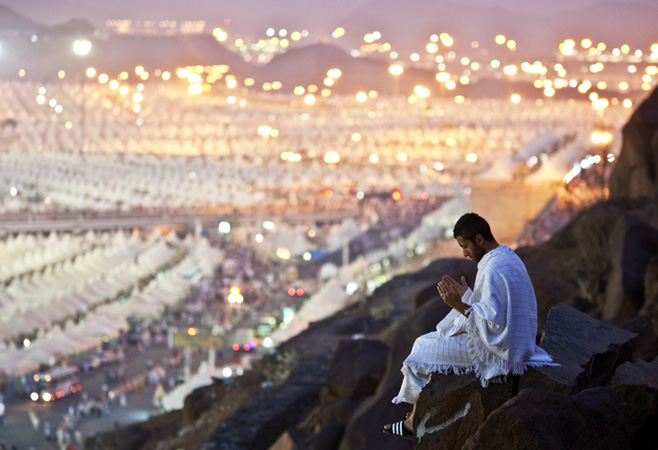 Pilgrims gather for prayers and reflection
Hajj Travel Packages Explained
Most pilgrims travel through organized Hajj packages, which simplify logistics and ensure compliance with Saudi regulations.
Common Types of Hajj Packages:
Economy packages: Basic accommodation, shared transport, and essential services
Standard packages: Better hotel locations, improved transport, and guided services
Premium or VIP packages: Hotels close to the Haram, private transport, and enhanced comfort
Packages typically include flights, accommodation in Mecca and Medina, ground transportation, meals, and guidance during rituals.
Packing Essentials for Hajj Travel
Pack light but smart, considering Mecca's hot climate and ritual needs. Here's a categorized checklist based on expert recommendations:
Travel Essentials
Passport, visa, tickets, and copies
Cash (Saudi Riyals) and cards
Mobile phone with international roaming or eSIM
Power bank and adapters
Physical Preparation
Ensure you are medically fit for long walks and crowded conditions
Consult a doctor before travel, especially if you have chronic conditions
Spiritual Preparation
Learn the Hajj rituals and their significance
Attend pre-Hajj training sessions offered by travel operators
Study supplications (duas) and Ihram rules
Clothing and Ihram
Two sets of Ihram (unsewn white cloths for men; modest attire for women)
Lightweight, breathable clothes
Comfortable slippers (easy to slip on/off)
Umbrella or hat for sun protection
Prayer Items
Prayer mat, Quran, and dua books
Compass for Qibla direction
Tasbeeh (prayer beads)
Health and Hygiene
Medications, first-aid kit (bandages, pain relievers)
Sanitizer, masks, and wet wipes
Unscented soap and toiletries (fragrances prohibited in Ihram)
Other Useful Items
Reusable water bottle
Snacks (energy bars, dates)
Small backpack for daily essentials
Notebook for reflections
Avoid overpacking; focus on necessities to ease mobility.
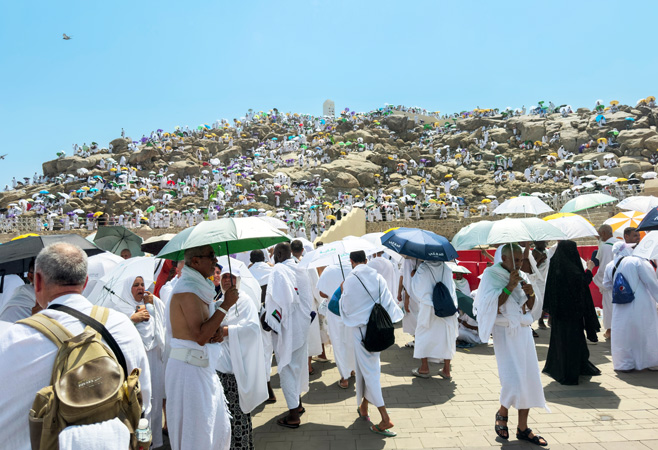 Pilgrims dressed in simple white ihram clothing are walking toward Mount Arafat
Health and Safety During Hajj
Hajj involves large crowds and extreme weather conditions in some years.
Important Health Tips:
- Stay hydrated at all times
- Avoid peak crowd hours when possible
- Follow instructions from the Saudi authorities and group leaders
- Keep your identification with you at all times
- Saudi Arabia provides extensive medical services during Hajj, including hospitals and emergency care near pilgrimage sites.
Cost of Hajj Travel
The cost of Hajj travel varies depending on:
- Country of departure
- Type of Hajj package
- Accommodation distance from Haram
- Duration of stay
- Included services
On average, Hajj travel costs typically range from USD 4,000 to USD 15,000 or more, depending on country of departure and package level. Prices tend to increase for premium services and closer hotel proximity. Pilgrims are encouraged to book early, as quotas and packages fill quickly.
On-Ground Logistics in Makkah and Madinah
Understanding the local infrastructure will significantly reduce stress during the five days of Hajj.
Transportation
The Al Mashaaer Al Mugaddassah Metro: This high-speed electric train connects the holy sites of Mina, Muzdalifah, and Arafat. If your package includes a train ticket, it is often the fastest way to move.
Shuttle Buses: Most packages rely on a fleet of buses. Be prepared for significant traffic delays during the "Nafrah" (the movement from Arafat to Muzdalifah).
Communication
Local SIM Cards: Purchase a local SIM (STC, Mobily, or Zain) at the airport upon arrival. Reliability on international roaming is often lower during peak Hajj hours due to network congestion.
Apps to Download: Ensure you have the Nusuk app installed, as it is commonly required for accessing certain services. Requirements for Tawakkalna may vary depending on current regulations.
Financial Planning
While most costs are covered in your package, you should budget for:
Hady (Sacrifice): Often paid via authorized platforms like Adahi.
Daily Expenses: Meals not included in your package and Sadaqah (charity).
Currency: While credit cards are widely accepted in malls, carrying Saudi Riyals (SAR) in small denominations is necessary for smaller vendors and tips.
Rules and Regulations for Hajj Travelers
Saudi authorities strictly regulate Hajj travel to ensure safety and organization.
Key rules include:
Entering Mecca during the Hajj season is restricted to authorized pilgrims only
Pilgrims must remain within designated areas
Overstaying a Hajj visa is prohibited and may result in penalties
Following official guidelines helps ensure a lawful and safe pilgrimage.
Tips for First-Time Hajj Pilgrims
Travel with an authorized and experienced Hajj operator
Keep copies of important documents (passport, visa, ID)
Be patient and mentally prepared for crowds
Focus on the spiritual purpose rather than physical discomfort
Support fellow pilgrims and maintain good etiquette
Final Thoughts on Hajj Travel
Hajj travel is a deeply spiritual journey that requires careful planning and preparation. From obtaining the correct visa to choosing the right travel package, every step plays a role in ensuring a meaningful pilgrimage. By understanding the requirements and preparing in advance, pilgrims can focus fully on worship and reflection during this sacred journey.