Sword Dance in Saudi: History, Meaning & Modern Practice
Updated: February 26, 2026
The sword dance in Saudi Arabia is known locally as Al-Ardah (العرضة). This tradition blends choreography, poetry, music, and symbolic martial display into one of the nation’s most recognisable folkloric performances. It is deeply rooted in Saudi history and continues to be an integral part of celebrations, national events, and cultural festivals today.
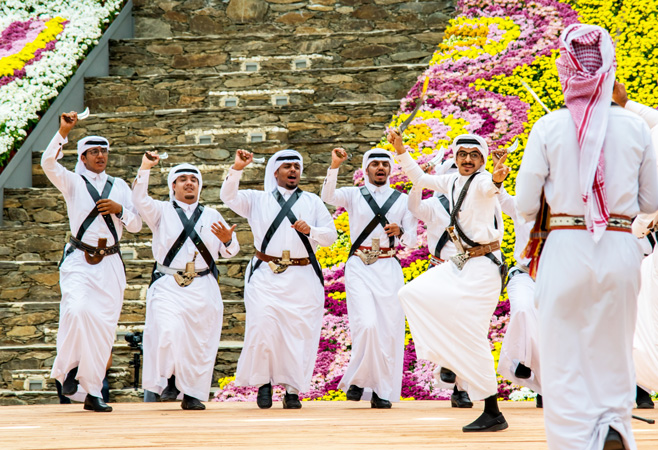 Majestic lineup of performers in the Saudi Ardah
What Is the Sword Dance (Al-Ardah)?
The Saudi sword dance, or Al-Ardah, is a traditional group dance that historically served as a pre-battle ritual among Arabian tribes. The dance features men standing in opposite lines, chanting poetic verses, swaying in unison, and rhythmically raising swords to the beat of drums.
In contemporary Saudi culture, it symbolizes unity, bravery, and national identity. The performance is predominantly male and often includes a flag bearer at its centre.
Historical Origins and Cultural Significance
From Warrior Ritual to National Symbol
Historically, Ardah was performed before battles to display warrior strength, unity, and readiness to defend territory and leadership. The name Ardah stems from an Arabic word meaning “to show” or to “parade,” reflecting its original purpose as a public demonstration of power and morale.
With the unification of Saudi Arabia under King Abdulaziz Al Saud, the dance gradually evolved from a martial prelude into a celebratory cultural art form. Today, it carries symbolic resonance for national pride and historical continuity.
UNESCO Recognition
In 2015, Al-Ardah Al-Najdiyah (Saudi Arabia) was inscribed on the UNESCO Representative List of the Intangible Cultural Heritage of Humanity, highlighting its importance not only locally but globally as a cultural treasure.
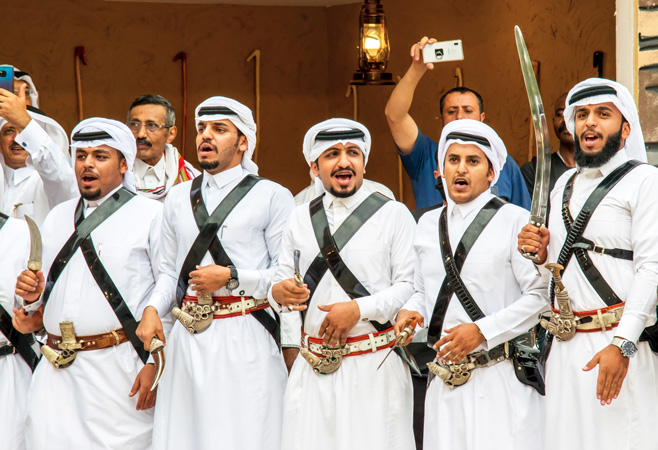 Group of Saudi men in traditional white thobes and red-checkered ghutras performing the Ardah sword dance – raising curved swords in synchronized rows to the beat of drums
Elements of the Sword Dance Performance
A traditional Ardah performance typically includes these elements:
Poetic Recitation: Performances begin with poetic verses that recount courage, loyalty, history, or communal values.
Drums and Rhythm: Percussion instruments like the Takhmir and Tathlith set a steady tempo that guides the dancers.
Flag and Costume: The Saudi flag often takes centre position, and dancers wear traditional attire tied to regional heritage, such as embroidered coats (daghla) and ceremonial garments.
Even though swords appear in the performance, the focus is ceremonial and symbolic; safety remains a priority during public displays.
How the Ardah is Performed
Watching an Ardah unfold is mesmerizing. Men stand shoulder to shoulder in two parallel lines, leaving space for drummers in the center. They wear traditional thobes, ghutras, and often carry lightweight swords raised high. The performance begins with poetic chants—up to 50 verses—that set the theme, followed by synchronized steps and arm movements to the beat of large frame drums.
The rhythm builds slowly, with performers swaying and stepping forward in harmony. A flag bearer might lead, waving the Saudi flag, while poets improvise lines about heritage or current events. It's all about precision and energy, lasting anywhere from a few minutes to over an hour, depending on the occasion.
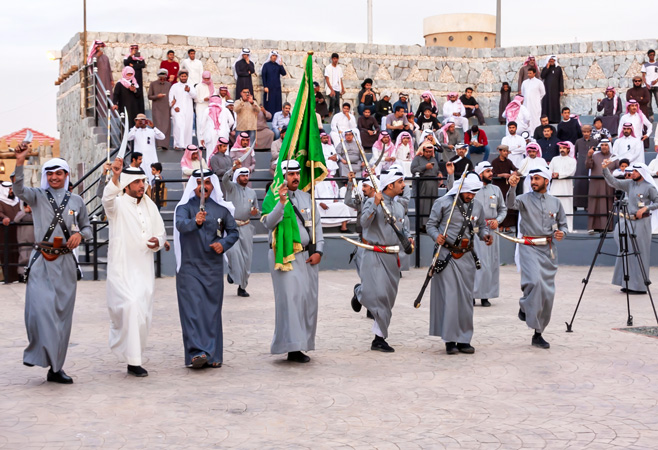 Vibrant Saudi Ardah sword dance at a national event – participants in ornate bisht cloaks and headscarves marching with raised swords and green Saudi flags
Where You Can See the Sword Dance
The sword dance is regularly featured in:
National Festival for Heritage and Culture (Janadriyah) – A major annual cultural event where Ardah is a highlight.
Saudi National Day and Founding Day Celebrations – Large-scale performances, including record-breaking group displays. Large-scale performances have been organized during Founding Day celebrations, sometimes involving hundreds of participants in coordinated displays.
Weddings, graduations, and royal ceremonies – Smaller but meaningful occasions where the dance is used to honour guests and mark important moments.
Some communities also host demonstrations of regional variations of Ardah across Saudi provinces, highlighting the diverse cultural expressions within the Kingdom.
Experiencing Al-Ardah as a Visitor
International tourists visiting Saudi Arabia increasingly have access to Al-Ardah performances thanks to the country's tourism opening. Understanding proper etiquette enhances the experience.
Dress modestly when attending cultural events—men should wear long pants and shirts, while women should cover shoulders and knees at a minimum, with headscarves recommended though not always required for non-Muslim visitors.
Observe respectfully without interrupting. Applause is appropriate at the conclusion of performances. If invited to join, approach with humility and follow the lead of experienced dancers—your participation, even imperfect, is usually appreciated as cultural respect.
Ask questions politely. Saudis generally welcome genuine interest in their traditions and happily explain the history and meaning behind the performance.
Frequently Asked Questions (FAQ)
Can tourists join the dance?
Generally, yes! It is considered a gesture of hospitality. If you are invited to join a row, move your sword (or hand) in rhythm with the group. It is a sign of respect and shared celebration.
Do the swords have sharp edges?
Traditional Ardah swords are designed for the dance; they are usually light and flexible to allow for the rhythmic "shaking" motion, though they are still treated with the respect due to a weapon.
Is the Ardah performed at weddings?
Absolutely. In many Saudi families, the groom and his relatives will perform a "Mini-Ardah" to celebrate the union of the two families.
Conclusion
The sword dance remains one of the most iconic expressions of Saudi cultural identity, linking modern celebrations with centuries-old traditions. Experiencing it live leaves a lasting impression of the Kingdom's vibrant traditions. Plan your visit around a festival, and you'll see why it endures.