What to Do at Mount Uhud: History, Sites to Visit & Travel Tips
Updated: December 29, 2025
Mount Uhud, known in Arabic as Jabal Uhud, is not merely a mountain; it is a monument of profound historical and spiritual significance located just north of Medina, Saudi Arabia. For millions of visitors annually, particularly those performing Hajj or Umrah, a visit to this site is a highly recommended and deeply meaningful ziyarat for many pilgrims and visitors to Madinah.
This guide focuses on the key sites, the historical context, and the best way to approach a visit to Mount Uhud.
Understanding the Significance of Mount Uhud
The primary search intent for visiting Mount Uhud is to connect with its place in early Islamic history. Jabal Uhud is the site of the Battle of Uhud, the second major military engagement between the early Muslim community and the polytheists of Mecca, which took place in 625 CE (3 AH).
The Historical Importance
The battle holds deep lessons for Muslims worldwide, centered on obedience, sacrifice, and leadership. The mountain itself is described in the Hadith as a mountain that "loves us, and we love it," emphasizing its spiritual status. Therefore, the core activity is not recreational climbing, but contemplation and historical reflection.
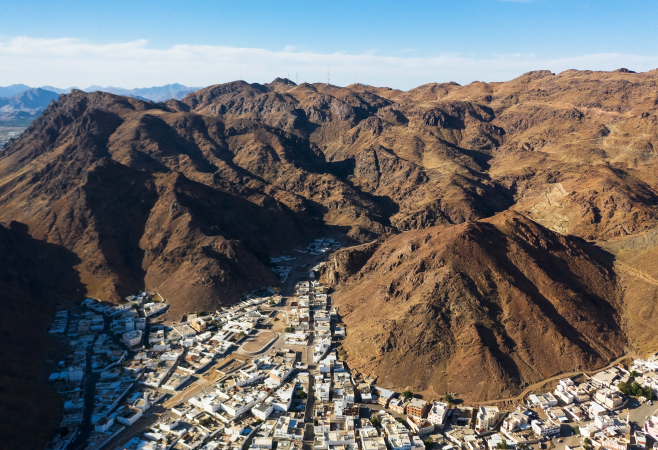 The rocky landscape of Mount Uhud, site of the historic Battle of Uhud
What to Do at Mount Uhud: Key Sites & Activities
Your visit can be structured around these key locations and respectful activities:
1. Explore the Historic Battlefield of Uhud
The main reason travelers visit Mount Uhud is to explore the site where the Battle of Uhud took place in 625 CE. There are several informational signs around the area, mainly in Arabic with some English, providing brief explanations of key events from the Battle of Uhud.
Activities include:
- Walking around the base of the mountain to appreciate its scale
- Identifying key locations from the battle, including the archers' position
- Taking in panoramic views of Medina (from permitted viewpoints)
- Experiencing the terrain that the early Muslims navigated
Important note: Check current regulations regarding climbing or hiking on Mount Uhud, as rules may change for preservation and safety reasons.
2. Visit the Uhud Martyrs Cemetery (Shuhada Uhud)
The Uhud Martyrs Cemetery is the primary destination for most visitors. This sacred burial ground is the final resting place of 70 companions who fell during the Battle of Uhud, including Hamza ibn Abdul-Muttalib, the Prophet's uncle.
Visitor tip: Dress modestly and maintain a respectful demeanor throughout your visit. Photography is generally allowed from outside the cemetery boundaries, but visitors should avoid taking inappropriate photos and always maintain a respectful attitude.
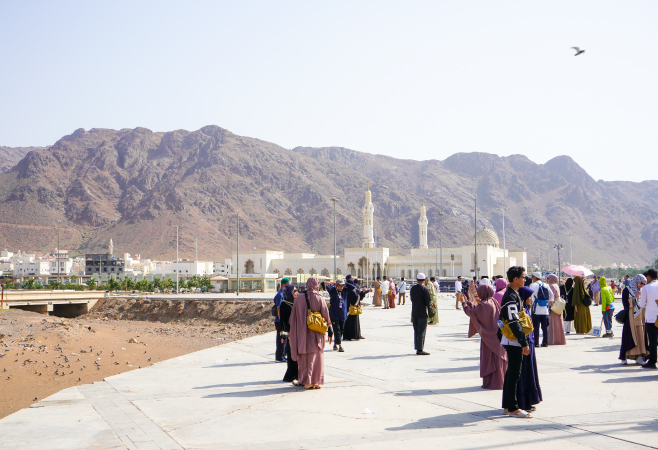 Visitors exploring the base of Mount Uhud
3. Visit the Archers’ Hill (Jabal al-Rumah)
Located directly across from Mount Uhud, this small hill played a central role in the Battle of Uhud. Visitors are generally allowed to climb Archers’ Hill, though the path is steep and rocky. Climbing higher sections of Mount Uhud itself is discouraged and may be restricted for safety and preservation reasons. This is one of the most popular and educational experiences near Mount Uhud.
What to expect:
- A short but steep climb provides historic context.
- Great views overlooking the battlefield area.
- On-site signage explaining the importance of the hill.
- Connecting with the human elements of this historical event
4. Enjoy Local Shops and Souvenirs
Around Mount Uhud, you'll find small shops selling:
- Dates (especially the famous Ajwa dates of Madinah)
- Prayer mats
- Islamic books and souvenirs
- Refreshments and traditional snacks
- Shopping here is a good way to support local vendors and take home culturally meaningful items.
5. Take Photos of the Scenic Landscape
Mount Uhud stretches over 7 km and stands out with its distinctive reddish-brown rocky terrain. Photographers love capturing:
- Sunrise or sunset over the mountain
- The panoramic view of Madinah from the slopes
- The contrast between the mountain and the modern city
- For the best lighting, visit early morning or late afternoon.
6. Combine With Nearby Attractions
Mount Uhud is conveniently located close to several important sites in Madinah, making it easy to plan a combined visit. Extend your itinerary with these spots:
- Al-Masjid an-Nabawi: The Prophet's Mosque, just a short drive away.
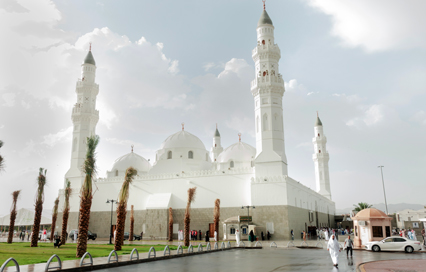
- Quba Mosque: The first mosque in Islam, offering more ziyarat opportunities.
- Date Palm Orchards: Explore Medina's agricultural side for a relaxing contrast.
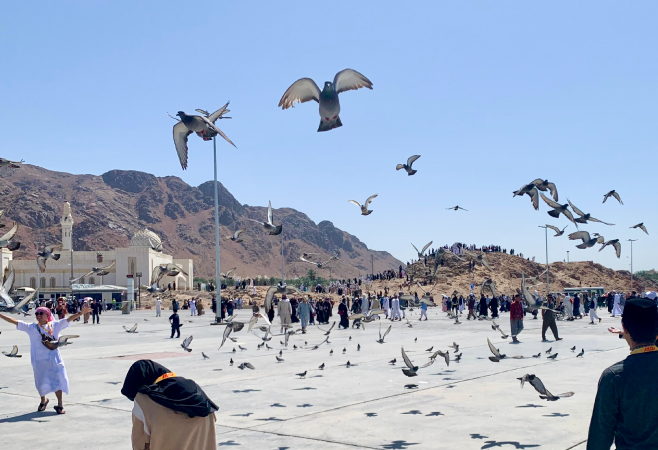 Visitors walking respectfully at Mount Uhud
Practical Tips for Visiting Mount Uhud
Best Time to Visit
Season:
Plan your trip between November and March when temperatures are mild (15-25°C), ideal for outdoor activities. Avoid the summer months (June-August) due to extreme heat exceeding 40°C.
Time of day:
Early morning (cooler weather, fewer crowds)
Late afternoon (excellent photography light)
Duration:
Plan to spend 1-2 hours at the site to fully experience the cemetery, the surrounding areas, and take time for reflection.
Getting There
Mount Uhud is about 5-7 km north of Medina's city center, making it easily reachable. Take a taxi, ride-hailing service like Uber or Careem, or join a guided tour from Al-Masjid an-Nabawi. Driving is straightforward with ample parking available. Public buses or group shuttles are options during peak pilgrimage seasons
Dress Code
Saudi Arabia has become more flexible, but modest clothing is still recommended:
- Shoulders and knees covered
- Comfortable shoes for walking
Women do not need to wear an abaya unless they prefer to.
What to Bring
- Water bottle
- Sun protection (hat, sunscreen)
- Camera or phone
- Comfortable shoes
Visitor Guidelines and Etiquette
- Maintain respectful behavior throughout your visit
- Keep noise levels low, especially at the martyrs' cemetery
- Follow all posted signs and instructions from authorities
- Dispose of trash properly to help preserve the site
- Respect prayer times and worshippers
- Women are not legally required to wear an abaya or hijab, but modest clothing and a headscarf are strongly recommended out of respect for the religious significance of the site.
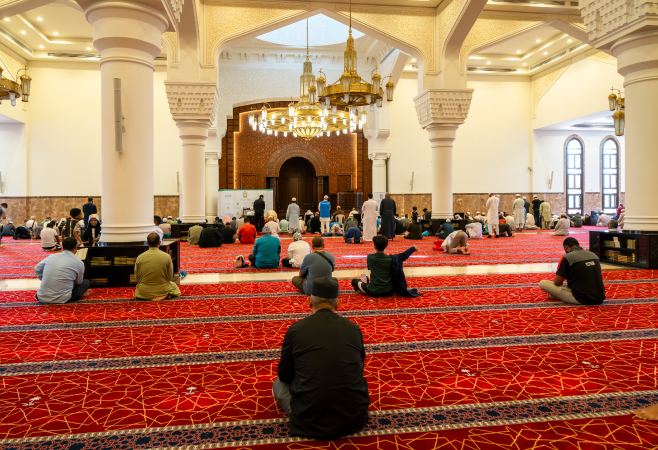 Pilgrims paying respects at the Mosque of the Chief of the Martyrs
Is Mount Uhud Open at Night?
Yes. Mount Uhud is an open public area without fixed visiting hours, but nighttime visits are generally limited to the lower areas, as lighting and facilities are minimal. The cemetery of the Uhud Martyrs, however, remains viewable only from outside, regardless of the time.
That said, most tourist traffic happens during the day, and night visits are far less common.
Who Should Visit Mount Uhud at Night?
A night visit is suitable for:
- Photographers looking for unique shots
- Pilgrims wanting a peaceful moment
- Travelers with limited daytime schedules
- People staying close by who want a short evening visit
What to Do at Mount Uhud at Night
1. Enjoy the Peaceful Atmosphere
Nighttime brings a very calm, reflective mood. Many visitors appreciate the quiet surroundings—especially after evening prayers.
2. View the Night Skyline of Madinah
The city lights create a beautiful backdrop, especially if you position yourself at the lower slopes.
3. Take Night Photography
With the right camera settings, you can capture:
- City lights
- Starry skies on clear nights
- Silhouettes of Mount Uhud
- Avoid flash photography on steep areas.
4. Visit the Shops Nearby
Small grocery stores, juice shops, and souvenir vendors sometimes remain open late, especially during busy tourism seasons.
Conclusion
If you’re wondering what to do at Mount Uhud in Saudi Arabia, this historic site offers a blend of spirituality, education, culture, and natural beauty. From exploring the battlefield to hiking the slopes and visiting the Martyrs' Cemetery, Mount Uhud is a must-visit destination for any traveler in Madinah.
Mount Uhud is more than a mountain—it is a living chapter of Islamic history and a place of deep spiritual resonance. From visiting the Martyrs’ Cemetery to walking around its historic terrain, each experience offers reflection on faith, sacrifice, and early Islamic history. For pilgrims and travelers alike, knowing what to do at Mount Uhud in Saudi Arabia ensures a visit that is both enriching and unforgettable.