Quba Masjid in Saudi Arabia: History, Virtues, and Visitor Guide
Updated: November 24, 2025
Among the countless sacred sites across Saudi Arabia, Quba Masjid (also spelled Quba Mosque) holds a uniquely revered place in Islamic history. Located in the holy city of Medina, it is recognized as the first mosque ever built in Islam — a symbol of faith, unity, and devotion.
For millions of Muslims visiting Saudi Arabia each year for Umrah, Hajj, or religious tourism, a visit to Quba Masjid is not only a spiritual experience but also a chance to connect with the origins of the Islamic community.
In this guide, we’ll explore the history, architectural beauty, religious significance, visiting tips, and Saudi visa information for travelers who wish to visit this remarkable site.
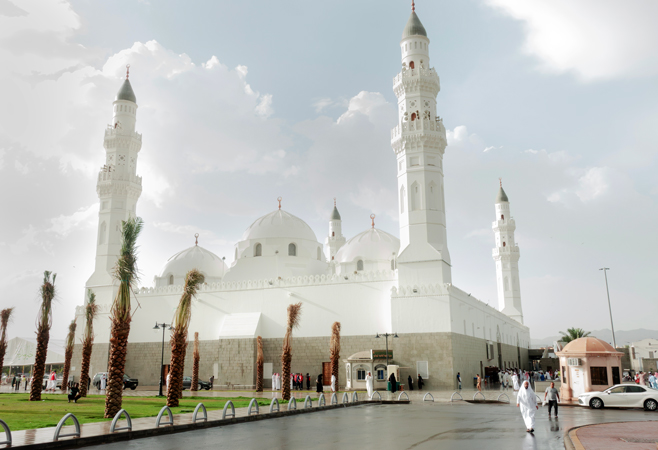 The stunning white exterior of Quba Masjid, the first mosque in Islam
Historical Significance of Quba Masjid
The story of Quba Masjid dates back to 622 CE, during the Prophet Muhammad’s (PBUH) migration (Hijrah) from Makkah to Medina. Upon arriving in the Quba village near Medina, the Prophet and his companions built a mosque on the land where his camel first knelt.
It became the first mosque ever constructed in Islam, and the Prophet (PBUH) personally laid its foundation stones. Historical records state that the Prophet often visited and prayed at the mosque every Saturday.
“Whoever purifies himself in his house, then goes to the Quba Mosque and offers prayer therein, will have a reward like that of an Umrah.” (Hadith – Ibn Majah 1412)
This hadith emphasizes the immense spiritual reward of praying in the Quba Masjid — making it one of the most beloved places for pilgrims and visitors to Medina.
Where is the Quba Masjid Located?
Quba Masjid is situated approximately 3 kilometers south of Al-Masjid an-Nabawi (The Prophet’s Mosque) in Medina, Saudi Arabia.
- Location: Quba Road, Medina, Saudi Arabia
- Distance: Around 10 minutes by car from the city center
- Transportation: Easily accessible by taxis, private cars, or guided religious tours.
Many Umrah and Medina city tours include Quba Masjid as part of their itineraries, alongside other historic landmarks such as Masjid Qiblatain and Mount Uhud.
Quba Masjid Visiting Hours & Rules
Category | Details |
| Open Hours | 24 hours (recommended: after Fajr or post-Asr) |
| Best Time | Early morning (5–8 AM) – cooler, less crowded |
| Dress Code | Ihram or modest attire; women must cover their hair |
| Photography | Allowed outside; no photos inside prayer halls |
| Women’s Access | Dedicated entrance & large prayer area (west side) |
Friday Jumu’ah | Arrive by 11 AM; expect high attendance |
How to Reach Quba Masjid (Transport Guide)?
From Madinah City Center / Masjid an-Nabawi
| Option | Cost (SAR) | Time | Booking |
| Uber/Careem | 15–25 | 8 min | App-based |
| SapTco Bus (Route 32) | 3 | 15 min | Cash on board |
| Hotel Shuttle | Free–30 | 10 min | Pre-book |
| Private Taxi | 20–40 | 7 min | Hotel concierge |
From Makkah (for Umrah Groups)
- High-Speed Haramain Train: Makkah → Madinah (2 h 15 m, SAR 150)
- Then Uber to Quba (SAR 20)
- Total Time: ~3 hours door-to-door
From Prince Mohammad Bin Abdulaziz Airport (MED)
- Distance: 17 km
- Taxi: SAR 50–70 (30 min)
- Airport Bus + Uber: SAR 25
Best Time to Visit Quba Masjid?
| Season | Ideal For | Notes |
October – March | Pilgrimage & sightseeing | Cooler weather, ideal for outdoor exploration |
| Ramadan | Spiritual visit | The mosque is beautifully lit, but expect crowds |
Hajj Season (June–August) | Religious pilgrims | Combine the visit with the Hajj journey (if staying in Medina) |
Tip: Visit early in the morning to avoid peak hours and to experience the mosque’s tranquility during Fajr prayers.
Things to Do in Quba Masjid: 6 Must-Experience Activities for Visitors
Quba Masjid in Madinah—the first mosque in Islam—offers far more than a quick prayer stop. This step-by-step list details 6 essential experiences—complete with exact locations, timings, rewards, and pro tips.
1. Perform Wudu with Zamzam at the Ablution Area
- Why Do It: Prepare yourself spiritually before entering the mosque. The wudu areas are clean, spacious, and well-maintained.
- Location: Dedicated wudu zones (men: east side; women: west entrance).
- Duration: 10 minutes
- Pro Tip: Use reusable bottles—refill stations available (sustainable travel).
2. Offer 2 Rak’ahs Tahiyyat al-Masjid Near the Original Foundation
- Why Do It: Equals the reward of one Umrah (Sahih Muslim 1393).
- Location: Offer 2 Rak’ahs Tahiyyat al-Masjid anywhere inside the prayer hall. Although the original foundation area is not publicly marked today, praying in Quba carries the reward mentioned in authentic hadith
- Duration: 5 minutes
- Best Time: Post-Fajr or after Asr (cooler, quieter).
- Dua to Recite: “Allahumma inni as’aluka min fadlika wa rahmatika…”
- Pro Tip: Men—pray in the front rows; women—use the elevated balcony for clear views.
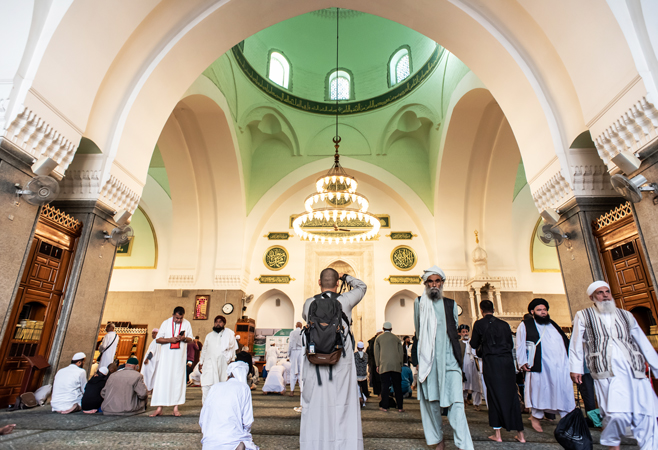 Worshippers praying inside Quba Masjid, embracing its serene atmosphere
3. Make Dua at Bi’r Quba (The Historic Well)
- Why Do It: The Prophet drank from this well, a powerful spot for supplication.
- Location: Small courtyard behind the mihrab (follow “Bi’r Quba” arrows).
- Duration: 5 minutes
- Historical Note: The historic well associated with Quba is located nearby, but it is not accessible inside the mosque complex. Visitors may see the general area, though the original well no longer exists in its historic form
- Pro Tip: Avoid peak hours (12–2 PM); early morning offers solitude.
4. Explore Quba Garden & the Prophet’s Date Palm Site
- Why Do It: Walk where the Prophet planted trees; serene, shaded reflection space.
- Location: South garden (exit prayer hall → left toward palm grove).
- Duration: 15 minutes
- Highlights:
- Original palm stump (encased in glass)
- Landscaped paths with Quranic verses on plaques
- Pro Tip: Photography allowed here—perfect for mindful travel journals.
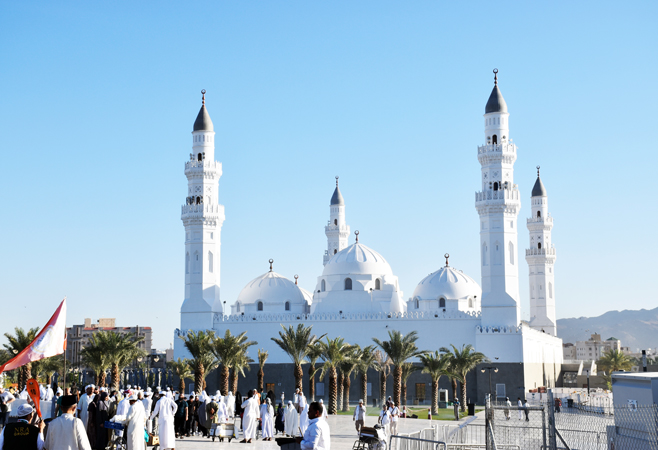 Pilgrims entering Quba Masjid to pray and seek spiritual blessings
5. Shop for Authentic Madinah Souvenirs (Dates, Miswak, Ajwa)
- Why Do It: Support local vendors; take home Prophet-recommended items.
- Location: Official mosque shops at Gate 1 & Women’s Exit.
- Duration: 10 minutes
- Top Buys:
- Ajwa Dates (500g): 25–35 (SAR). Sunnah food
- Miswak Stick: 5–10 (SAR). Natural toothbrush
- Mini Zamzam Bottle: 15 (SAR). Gift-ready
- Pro Tip: Haggle respectfully; pay in cash (smaller bills).
6. Take a Reflective Walk Along the Shaded Peripheral Path
- Why Do It: Contemplative loop with views of minarets and Madinah skyline.
- Location: Outer walkway (fully shaded, wheelchair-friendly).
- Duration: 5–10 minutes
- Pro Tip: End with a final glance at the white dome—symbol of purity.
Etiquette and Visitor Tips
Before visiting Quba Masjid, travelers should keep the following in mind:
- Dress modestly in accordance with Islamic customs — women should wear abayas and men should wear respectful attire.
- Perform ablution (wudu) before entering the mosque for prayer.
- Avoid loud conversations and photography inside the prayer halls.
- Follow local prayer timings, especially during Friday prayers (Jumu’ah), when the mosque becomes very crowded.
- Respect gender-segregated areas and instructions from mosque staff.
Travel and Saudi Visa Information
To visit Quba Masjid and other sacred sites in Medina, travelers must obtain a Saudi Arabia visa. Depending on your purpose and nationality, you can apply for one of the following:
1. Saudi Tourist eVisa
Ideal for travelers visiting for cultural, historical, or religious tourism outside the Hajj season.
Validity: One year (multiple entries).
Stay Duration: Up to 90 days per visit.
Application: Online via official Saudi visa platforms.
2. Umrah Visa
Designed for Muslims who wish to perform Umrah and visit holy sites like Quba Masjid, Masjid an-Nabawi, and Masjid al-Haram.
Issued through: Licensed travel agents or the official Saudi Umrah portal.
Required Documents: Passport, accommodation details, and confirmed return tickets.
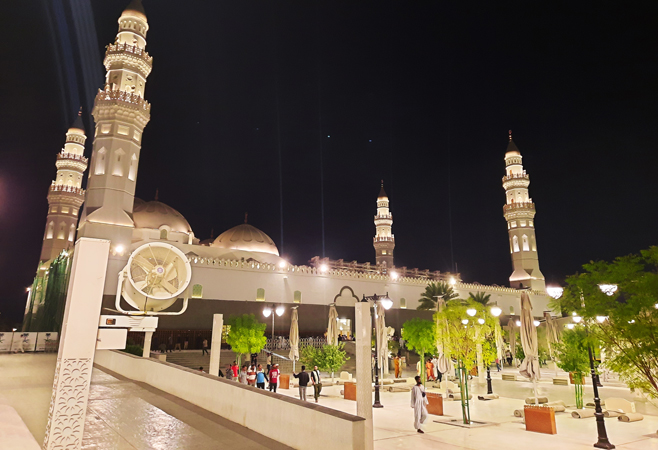 Quba Masjid at night
Other Attractions Near Quba Masjid
Visitors to Quba can explore several nearby historical and cultural sites, making it a fulfilling spiritual journey:
- Masjid Qiblatain (Mosque of the Two Qiblas) – where the direction of prayer was changed from Jerusalem to Makkah.
- Mount Uhud – the site of the famous Battle of Uhud.
- Al-Masjid an-Nabawi (Prophet’s Mosque) – one of Islam’s two holiest mosques.
- Medina Souq and Date Market – for buying traditional souvenirs, dates, and local crafts.
These locations, combined with Quba, form the heart of Medina’s Islamic heritage trail.
Conclusion
Visiting Quba Masjid is a journey back to the roots of Islam — where faith, community, and devotion first took physical form. For Muslims around the world, praying at Quba offers a deep spiritual reward and a connection to the Prophet’s legacy. Whether you’re visiting Medina for Umrah, Hajj, or general tourism, make sure this sacred mosque is part of your itinerary.
Plan your trip ahead, book your accommodations near Medina’s historical landmarks, and apply for your Saudi eVisa to experience the timeless serenity of Quba Masjid — the first mosque in Islam.