Saudi Flag Day: History, Meaning, and Celebration
Updated: August 20, 2025
Saudi Flag Day (Arabic: يوم العلم السعودي), celebrated annually on March 11, is a significant national occasion in Saudi Arabia that honors the Kingdom’s national flag. This day reflects the pride, unity, and historical legacy of the Saudi state, commemorating the adoption of the flag’s current design by King Abdulaziz Al Saud in 1937.
Key Facts About Saudi Flag Day
Aspect | Details |
Date | March 11 |
| First Official Celebration | 2023 |
| Is it a public holiday? | No, businesses and schools remain open |
| Flag inscription | "There is no deity but God; Muhammad is the Messenger of God." |
| Symbolism | Faith, unity, justice, strength, and dignity |
| Main celebration activities | Flag displays, cultural events, and educational programs |
Now, let's explore the history, meaning, and celebrations of Saudi Flag Day, addressing key questions such as “Is Flag Day a holiday in Saudi Arabia?” and “What does the Saudi Arabia flag say?”
What is Saudi Flag Day?
Saudi Flag Day is dedicated to honoring the national flag of Saudi Arabia. It commemorates the official adoption of the Kingdom’s national flag on March 11, 1937, by King Abdulaziz, the founder of modern Saudi Arabia.
Unlike Saudi National Day (September 23) and Saudi Founding Day (February 22), which mark the unification of the Kingdom and the establishment of the First Saudi State, respectively, Saudi Flag Day specifically honors the flag’s role and promotes national pride and unity among citizens and residents.
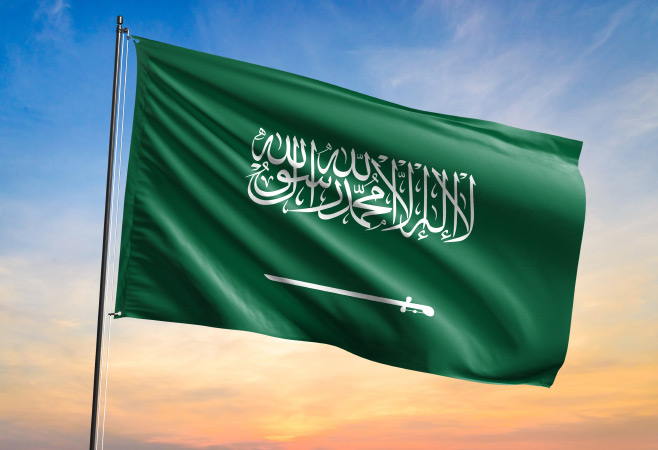 The Saudi national flag soars high during Flag Day, representing strength, faith, and identity
When Is Saudi Flag Day?
Saudi Flag Day is celebrated annually on March 11.
This specific date commemorates a historic milestone: On March 11, 1937 (corresponding to 27 Dhul Hijjah 1355 AH), the late King Abdulaziz officially approved the design of the Saudi flag as we know it today.
Is Flag Day a Holiday in Saudi Arabia?
No, Saudi Flag Day is not a public holiday. Government offices, schools, and businesses continue to operate as usual. However, it is still widely marked by official ceremonies, educational events, and public displays of the Saudi flag across cities.
History of Saudi Flag Day
The Saudi flag has evolved over centuries, reflecting the nation’s Islamic identity and historical legacy. Key milestones include:
Early Designs: The flag’s origins trace back to the First Saudi State (1744–1818), featuring the Shahada (Islamic declaration of faith) and a green background, symbolizing peace and Islam.
Modern Adoption: The current design was standardized under King Abdulaziz Al Saud in 1937, incorporating a sword below the Shahada to represent justice and strength.
What Does the Saudi Flag Represent?
The Shahada: Islamic Declaration of Faith
The Saudi national flag is a deep green rectangle with a white Arabic inscription in the center, known as the Shahada, which reads: “There is no god but Allah, and Muhammad is the Messenger of Allah” (Arabic: لا إله إلا الله محمد رسول الله). It reflects the country’s foundation on Islamic principles.
The Sword: Symbol of Strength and Justice
Below the Shahada is a white horizontal sword, with its handle pointing to the right (from the hoist side), representing:
- Military strength
- Justice
- The unification of the Kingdom under Islam
The Green Background: Islamic Heritage
The green color is deeply associated with Islam and reflects:
- Paradise in Islamic teachings
- Renewal and peace
- Saudi Arabia’s Islamic roots
The flag is unique because it is never flown at half-mast, reflecting its sacred status due to the Shahada. It is designed to be identical on both sides, ensuring the inscription and sword are always correctly oriented. The flag’s design is deeply rooted in the Kingdom’s Islamic heritage and its historical unification campaigns.
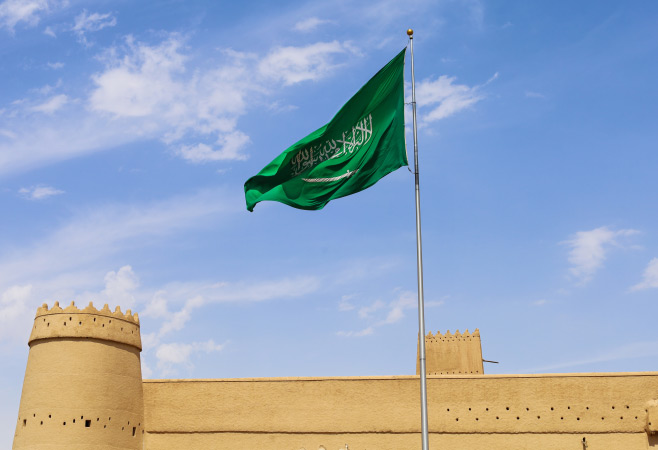 Iconic landmarks across Saudi Arabia illuminated in green for Flag Day festivities
How Is Saudi Flag Day Celebrated?
Though not a day off, Saudi Flag Day celebrations are becoming increasingly vibrant. Across Saudi Arabia, schools, government buildings, and private establishments raise the flag and host educational sessions and cultural programs. Common celebration activities include:
Flag Displays: Streets, buildings, and public squares, such as Al-Hukm Palace Square in Riyadh, are adorned with Saudi flags.
Cultural Events: Parades, traditional performances like the Saudi Ardah (a folk dance with a special flag called Bairaq Al Ardah), and exhibitions highlight the flag’s history.
Official Ceremonies: Government officials, including the Minister of Tourism and regional governors, extend congratulations to King Salman and Crown Prince Mohammed bin Salman, emphasizing the flag’s role in national unity.
Educational Initiatives: The Ministry of Education organizes events in schools to promote citizenship and pride in the flag.
Community Engagement: Citizens wear green and white, the national colors, and participate in festivals, reflecting the flag’s role as a symbol of unity.
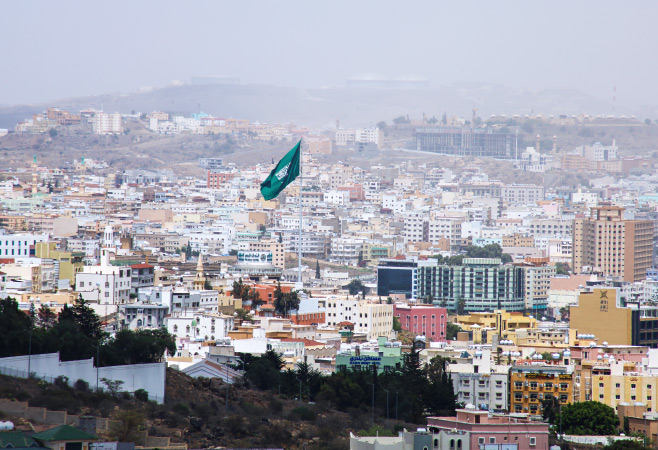 The green and white of the Saudi Flag fly high through the Kingdom
How Saudi Flag Day Differs from Saudi National Day
While both holidays celebrate national pride, Saudi Flag Day focuses specifically on the flag’s historical and symbolic significance, whereas Saudi National Day (September 23) commemorates the unification of the Kingdom of Nejd and Hejaz into Saudi Arabia in 1932.
While the use of green flags with the Shahada dates back to the 18th century, the current flag design with the sword was officially standardized in 1937 under King Abdulaziz, while National Day marks the formal establishment of the modern state.
Saudi National Day and Founding Day are public holidays, but Flag Day is not. On Flag Day, schools, businesses, and government offices remain open, but cultural, educational, and symbolic events are held nationwide
Saudi Flag Unique Characteristics
- The Saudi flag is treated with great respect due to its sacred inscription.
- Unlike many national flags, the Saudi flag is never flown at half-mast, as it bears the name of Allah and the sacred Shahada.
- The sword always points left, while the Shahada is read from right to left in traditional Arabic script.
- The Saudi flag is permanently flown at government buildings, schools, and institutions. It is also raised prominently during Fridays, national occasions, and special ceremonies.
- The flag must not touch the ground when lowered and is stored in a special case.
- Its use for commercial or promotional purposes is prohibited.
- The flagpole is placed centrally at buildings, and the flag is flown continuously on ships in Saudi waters.
These elements make the Saudi flag not just a national emblem but a symbol of profound spiritual meaning.
Frequently Asked Questions (FAQ) About Saudi Flag Day
What date is Saudi Flag Day?
Saudi Flag Day is celebrated on March 11 every year.
Is Saudi Flag Day a public holiday?
No, it is not a public holiday. Offices and schools remain open.
Who established Saudi Flag Day?
It was established in 2023 by King Salman through a royal decree.
Why can’t the Saudi flag be lowered?
Because it contains the Shahada, lowering it would be seen as disrespectful to Islam.
Is it okay to wear the Saudi flag on clothing?
No. Saudi law prohibits using the flag in a way that may be discarded or disrespected, including clothing, rugs, or packaging.
What makes the Saudi flag different from others?
It includes the Shahada, must always be flown high, and features a sword symbolizing justice.
Plan Your Visit to Saudi Arabia for Flag Day
Saudi Flag Day on March 11 is a proud moment for the Kingdom, celebrating a symbol that has flown high since 1727. Whether you’re a citizen or a visitor, joining the festivities offers a unique opportunity to connect with Saudi Arabia’s rich history and vibrant culture.